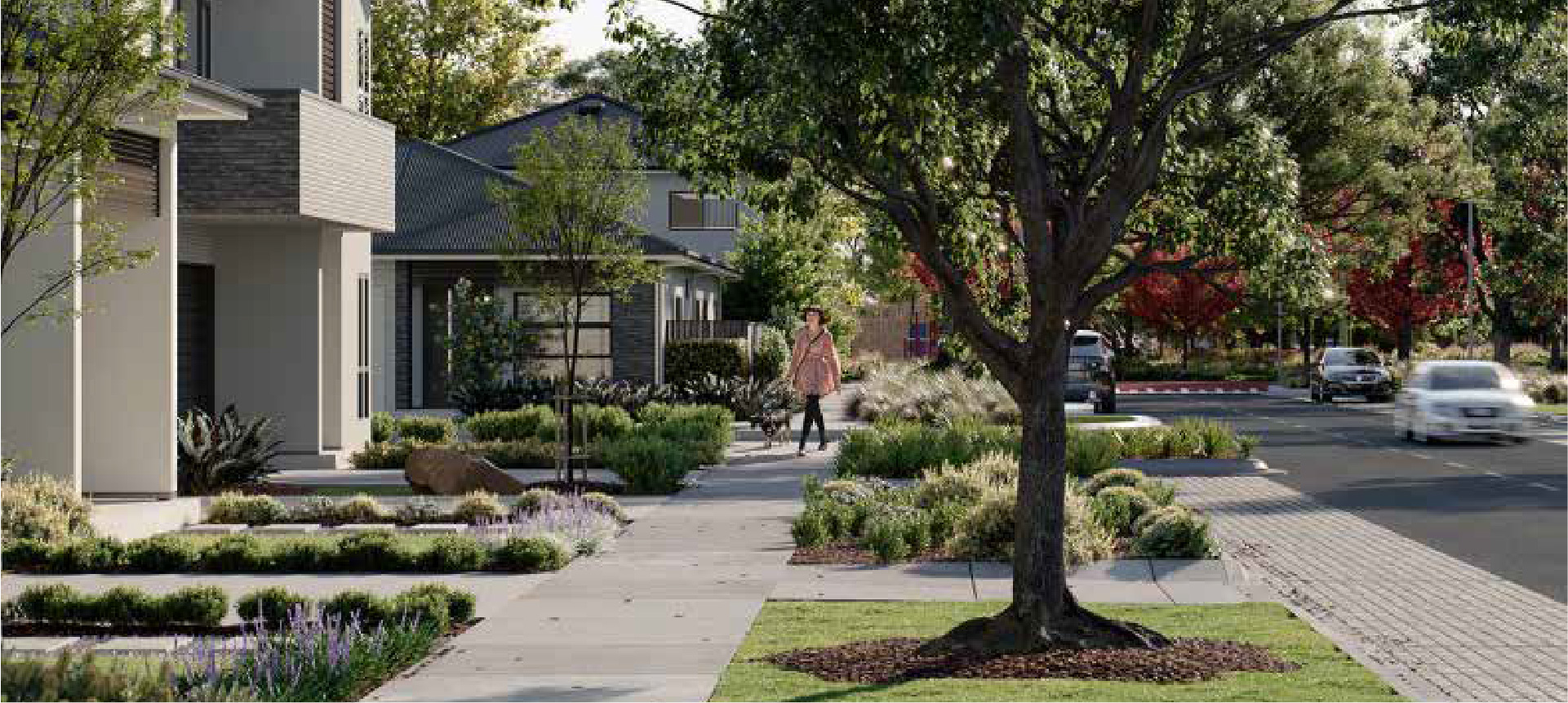
Landscaping is essential for enhancing the identity, quality and liveability of a residential neighbourhood. It provides a natural buffer between homes and the street, enhancing privacy while inviting social interaction.
KEY DESIGN CONSIDERATIONS:
Front Planted Hedge: A planted hedge in a garden bed is encouraged along the front boundary. Hedging to be planted every 0.5m maximum to ensure a continuous hedge is created.
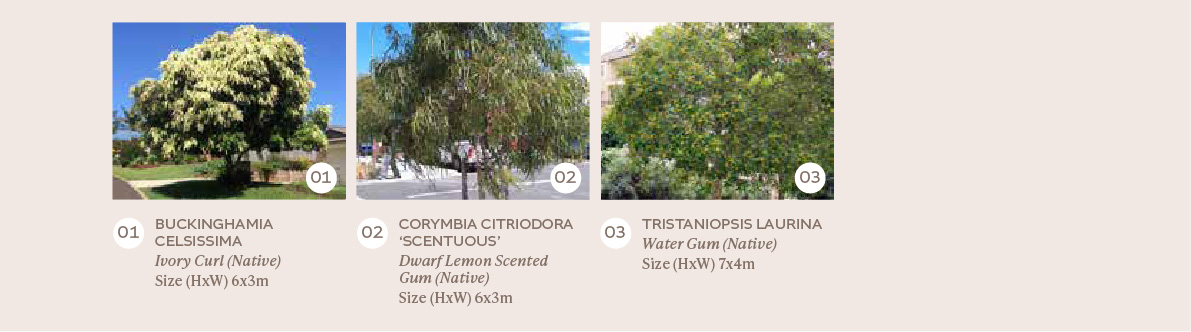
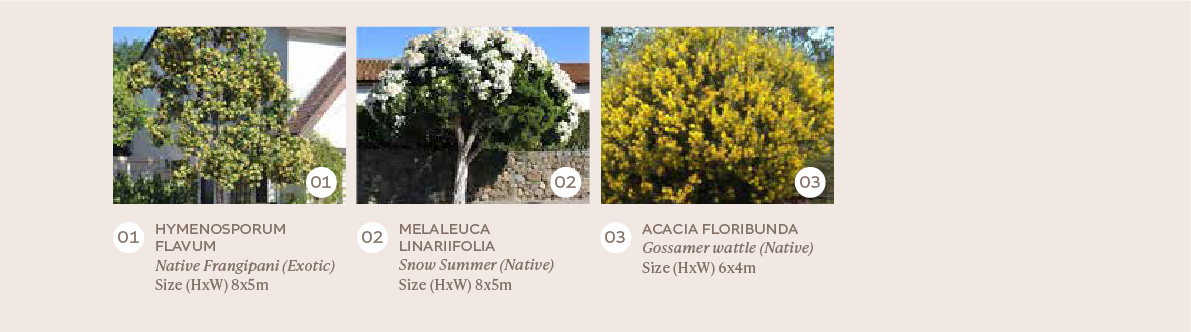
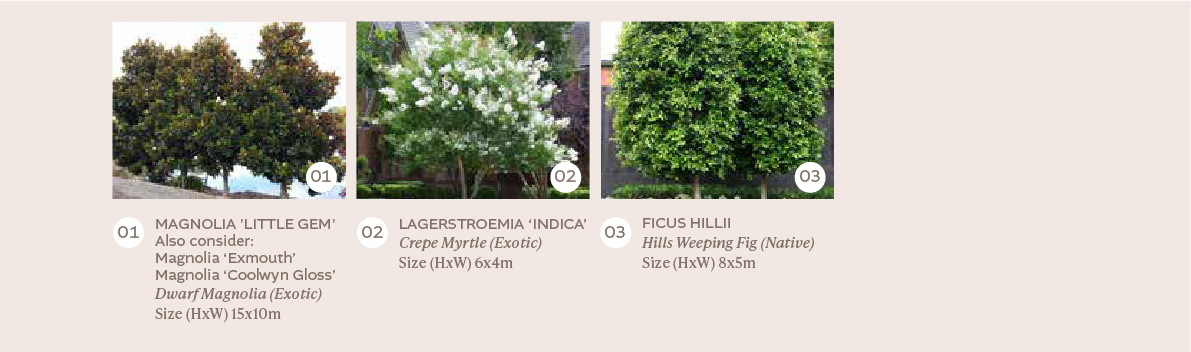
Front Tree: All front yards are to include a minimum 1x feature tree with a minimum 75L pot size, and must be selected from the approved species list (see tree palette).
Front Garden Beds: Garden beds must appear fully planted at installation (avoid empty mulched areas), and edging must be masonry or steel (no timber or plastic).
Minimum Sizing: No tube stock is permitted. Refer to Recommended Plant Species List for minimum allowed pot sizes.
Lighting: External lighting of landscaped and outdoor areas are to consider impacts to surrounding neighbours.
Front Garden: Landscape Objectives
OBJECTIVES
The primary goal is to create well-designed front gardens that contribute to a cohesive, high-quality streetscape while respecting the distinctive character of the residential estate. This landscape objective guides design outcomes that enhance individual properties and contributes to the local landscape character and ecology.
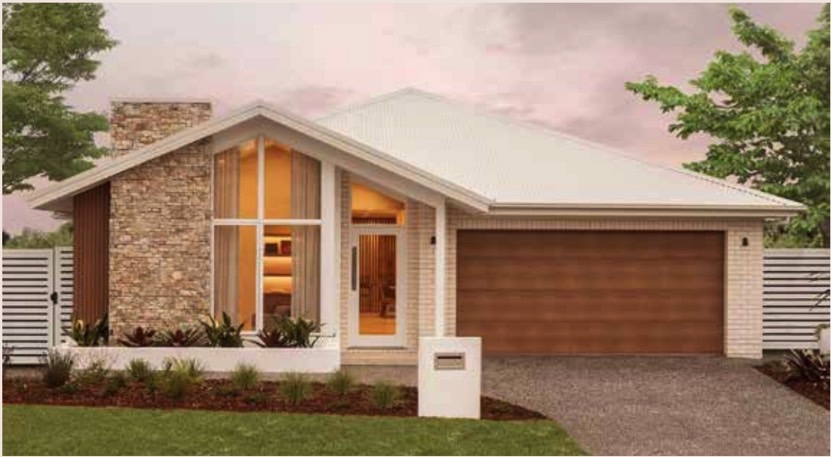
Seacliff by Mojo Homes. Artist’s Impression*
Promote a Unified Streetscape
Thoughtfully planned landscaping, particularly in areas visible from public spaces, supports a consistent and aesthetically pleasing neighbourhood presentation.
Minimise Hard Surfaces and Maximise Green Spaces
Minimise the use of extensive hardscaping, such as driveways, in favour of garden beds, turf, and permeable surfaces, especially in areas visible from streets, parks, and public pathways.
Create Privacy (Where Required)
Landscaping elements should be incorporated to provide additional privacy, particularly in properties with higher visibility or open frontages.
Prioritise Climate Resilient Planting
The use of climate resilient planting supports a sustainable, low-maintenance garden that promotes long-term resilience.
Urban Heat Island Reduction
Incorporating canopy trees reduces the urban heat island effect and will cool your property and neighbourhood.
Promote Biodiversity
Using a variety of native and flowering plants contributes to bee population, habitat and a healthy garden ecosystem.
Beautiful, Sustainable Front Gardens to Enrich Your Home and Streetscape
Every home contributes to the character and aesthetic of its neighbourhood. A well-considered landscape design, paired with appropriate plant selection and sizes can significantly enhance both the individual property and the broader Mulgoa. To ensure the best results, homeowners are encouraged to seek expert guidance from qualified landscape designers / architects, local nurseries, and horticultural specialists.
Front Garden Design Elements
GENERAL LANDSCAPE CONTROLS
Driveway
Driveways must be no wider than 3.5 metres at the property boundary to maintain a consistent and visually balanced streetscape. To soften the appearance of hard surfaces and enhance the overall look of the front garden, a minimum 500mm wide landscaped strip must be included between the edge of the driveway and the side boundary. This area provides space for planting or turf and contributes to a greener, more welcoming street frontage.
Driveway materials and colours to be selected from the materials and colour section of this guide.
Fences
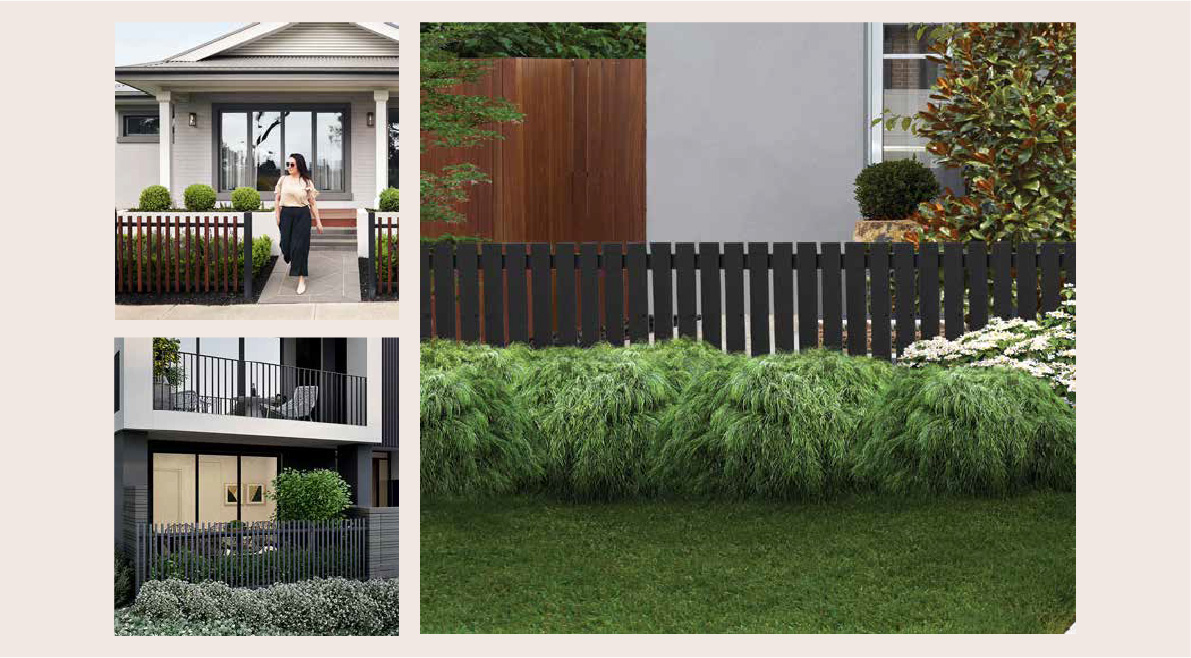
Front fencing is optional; however, if installed, it must be positioned at least 1m behind the front property boundary, with a landscaped garden strip with edging in front to soften its appearance. See landscape controls for fence details.
Front fencing is to be a maximum 1000mm in height and be of permeable design constructed from high quality materials such as timber battens or powdercoated metal. Lapped and capped fencing is not to be visible from the street.
Pool fencing is not permitted.
All plans for front fencing are to be submitted to the DRP for approval prior to installation.
Planting
Each front garden must include at least one feature tree, with a preference for two, each with a mature height of 4 metres. When possible, stagger garden trees with existing street trees to create a consistent and layered canopy along the street.
For optimal results:
Planted garden beds must be provided to a minimum of 50% of the available soft landscaping area forward of the building line on the primary street frontage and 20% of the available soft landscaping area forward of the building line on the secondary street frontage (if applicable).
Garden beds should incorporate a 50/50 ratio of shrubs to ground covers to establish an appealing look.
Front Porch
Front entry porch ground cover or deck is to be appropriately finished in materials such as timber decking, tiles or pavers. Unfinished concrete or similar will not be accepted.
THE PROCESS
Essential Information Before and After Moving In
To preserve high-quality streetscapes and maintain a cohesive visual identity for the community, all front gardens and areas visible from the street must be fully landscaped within three months of moving into a property. This includes turf, fencing, driveways, and entry pathways.
Before Construction: Submit Your Landscape Plan
As part of the Design Review Panel (DRP) application, a comprehensive landscape design must be submitted. This step is crucial and should be completed prior to lodging the development application with the local council. Landscaping must be completed prior to compliance bond refund
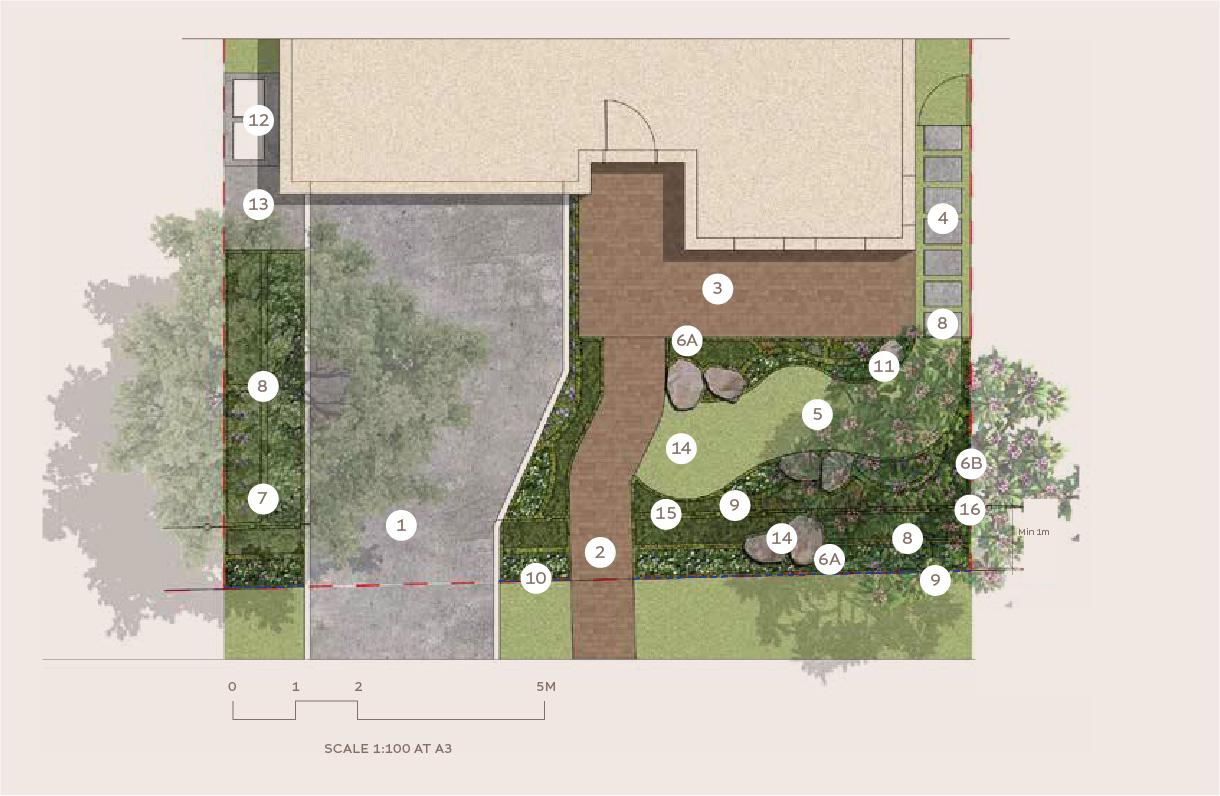
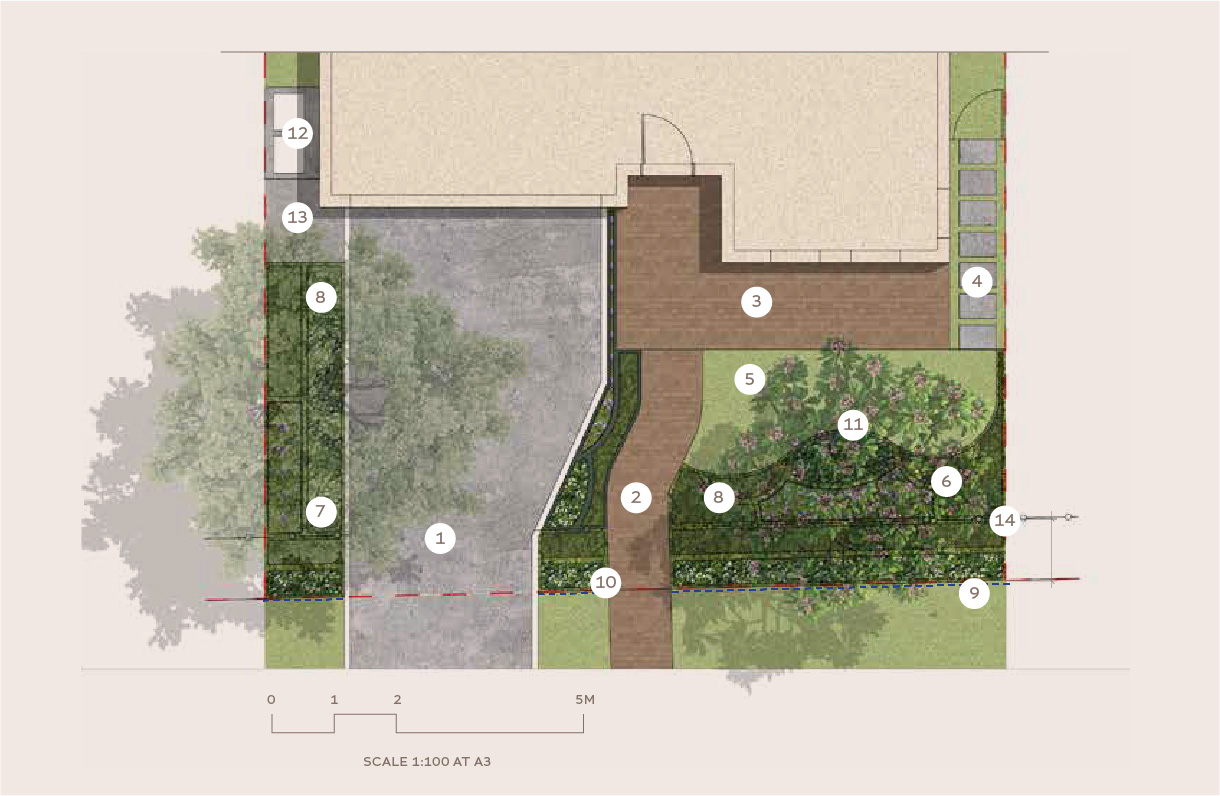
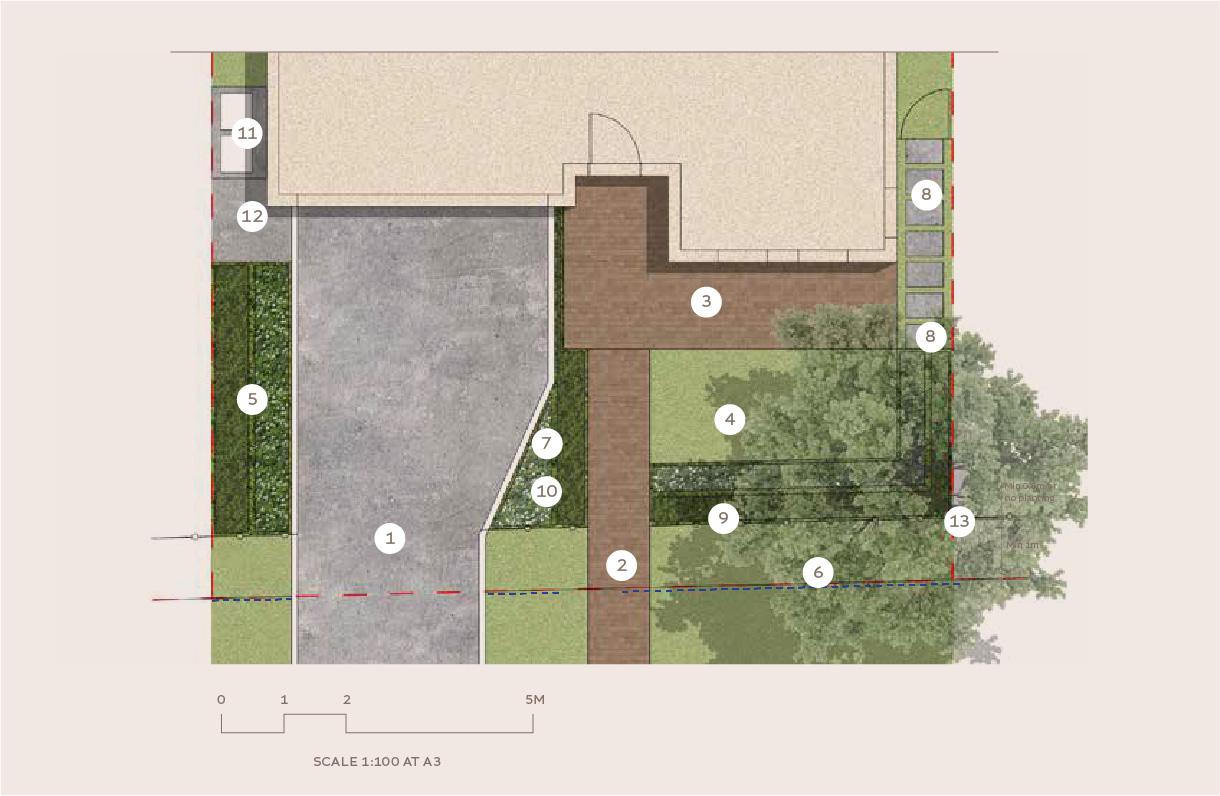
Figures 1.1, 1.2 and 1.3 below provide examples of good front yard designs that features that can be used for inspiration or as guidance for your landscape designer
EXAMPLE PLAN 1.1
Design Notes:
Driveway
Entry path
Front porch
Paved / hard surface
Turf area
Small Feature tree. 6A. Small tree. 6B. Feature tree
Layered planting
Native tree
Garden edging (Core-ten, stone, brick or concrete)
Letter Box
Seat / Daybed
Bin Area
Bin Storage Area (behind gate)
Rocks / boulders
1200mm ht Vertical picket / batten style front fence w/ min 10mm gap opening between vertical elements (optional). Replace with edging if deleted.
EXAMPLE PLAN 1.2
Design Notes:
Driveway
Entry path
Front porch
Stepping stones in mulch or groundcovers
Turf area
Feature tree
Layered planting
Native tree
Garden edging (Core-ten, stone, brick or concrete)
Letter Box
Seat
Bin Area
Bin Storage Area (behind gate)
1200mm ht Vertical picket / batten style front fence w/ min 10mm gap opening between vertical elements (optional). Replace with edging if deleted.
EXAMPLE PLAN 1.3
Design Notes:
Driveway
Entry path
Front porch
Tree in turf (optional)
Turf area
Native Tree
Layered planting
Mulch path
Optional garden bed
Letter Box
Bin Area
Bin Storage Area (behind gate)
1200mm ht Vertical picket / batten style front fence w/ min 10mm gap opening between vertical elements (optional). Replace with edging if deleted.
Front Garden: Landscape Process and Controls
LANDSCAPE CONTROLS
Layout
The selection of materials, plants, and colours should complement the exterior of the home, ensuring a harmonious and consistent aesthetic.
Services and Easement Awareness
Property owners should be mindful of any underground service and easements on their land. Certain areas may have planting restrictions, particularly for trees. For guidance, consult with Penrith City Council or the service authority.
Garden Beds
It is essential to avoid invasive or environmental weed species and use planting from the recommended plant list.
Trees minimum 75L pot size.
Shrubs minimum 200mm pot size.
Groundcovers minimum 150mm pot size.
Organic Mulch and Pebbles
Brightly dyed mulches or pebbles (e.g. red, black or white) are prohibited. Only natural-coloured pebbles and organic mulch are acceptable in front garden designs (e.g., washed river pebble of the like).
Garden Bed Edging
Garden beds must have neat, flush edges using approved materials, including:
Steel: Electro-galvanised mild steel or Core-ten.
Face Brick or Stone.
Round timber, logs or plastic edging not accepted.
Concrete.
Turf Selection
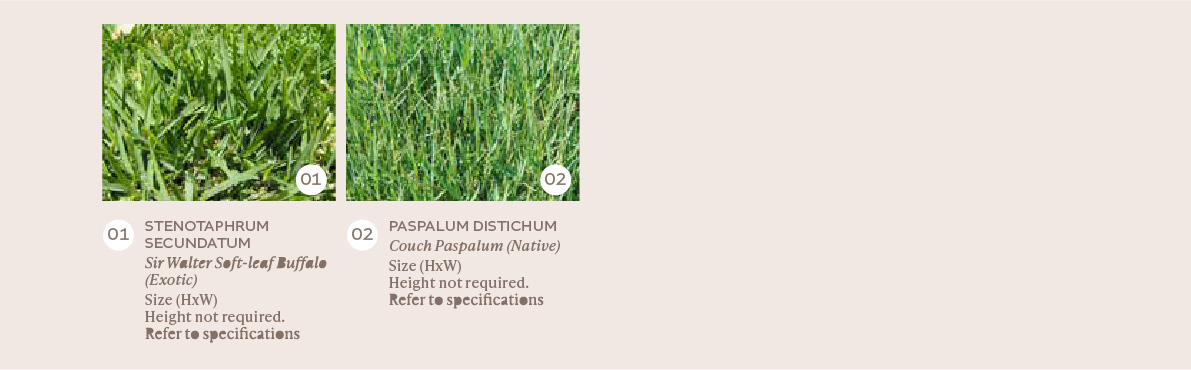
All lawns must be planted with warm-season grass, such as buffalo, which is well-suited to the local climate, providing year-round coverage. These grasses are hardy, water-efficient, and appropriate for residential areas.
To maintain a natural streetscape, synthetic turf is not permitted to the front yard or any areas visible from the street.
Topsoil for Healthy Turf
A minimum of 150mm of good-quality topsoil is required for turf installation to support healthy root development and ensure long-term lawn performance.
Maintenance
Lawns must be regularly mowed and edged to maintain a clean, well-kept appearance. A neat lawn enhances the property and contributes to the overall visual appeal of the street.
Garden beds and turfed areas must be free from weeds and kept neat and tidy.
The verge (nature strip) in front of the property must be turfed and maintained by the homeowner. This area must be included in the landscape plan and is part of the overall landscaping responsibility.
Understanding Sunlight Helps You Select the Right Plants
The amount of daily sunlight garden receives significantly influences plant selection and longterm landscape success. The following guide outlines suitable plant characteristics based on garden orientation, helping to inform species choices from the recommended planting palettes aligned with each design theme.
North-Facing Front Garden
Exposed to the highest levels of direct sunlight throughout the day. Best suited to sun-tolerant species that thrive in full sun and withstand dry conditions.
West-Facing Front Garden
Receives minimal winter sun and remains shaded for extended periods. Ideal for shade-tolerant species adapted to cooler temperatures and low-light environments.
South-Facing Front Garden
Shaded during the morning, followed by intense afternoon sun, particularly in summer. Requires heat- and sun-tolerant plants capable of enduring strong, late-day sunlight.
East-Facing Front Garden
Enjoys gentle morning sun followed by partial shade in the afternoon. Well-suited to shade-tolerant or part-shade species that benefit from softer, indirect light.
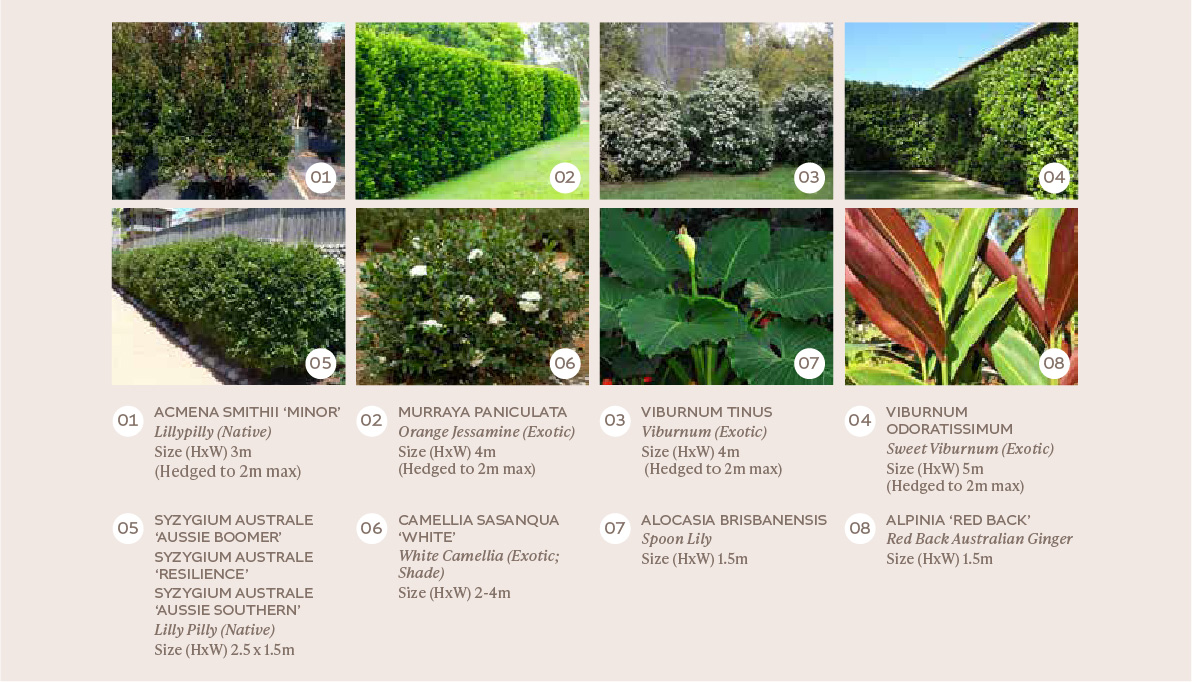
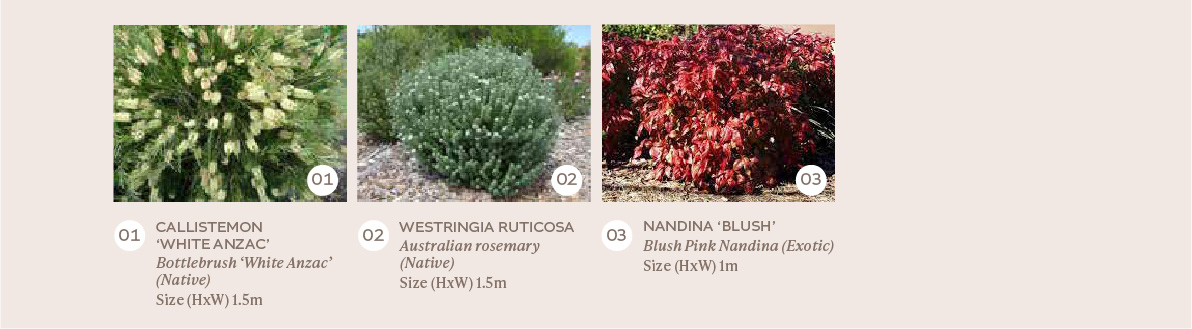
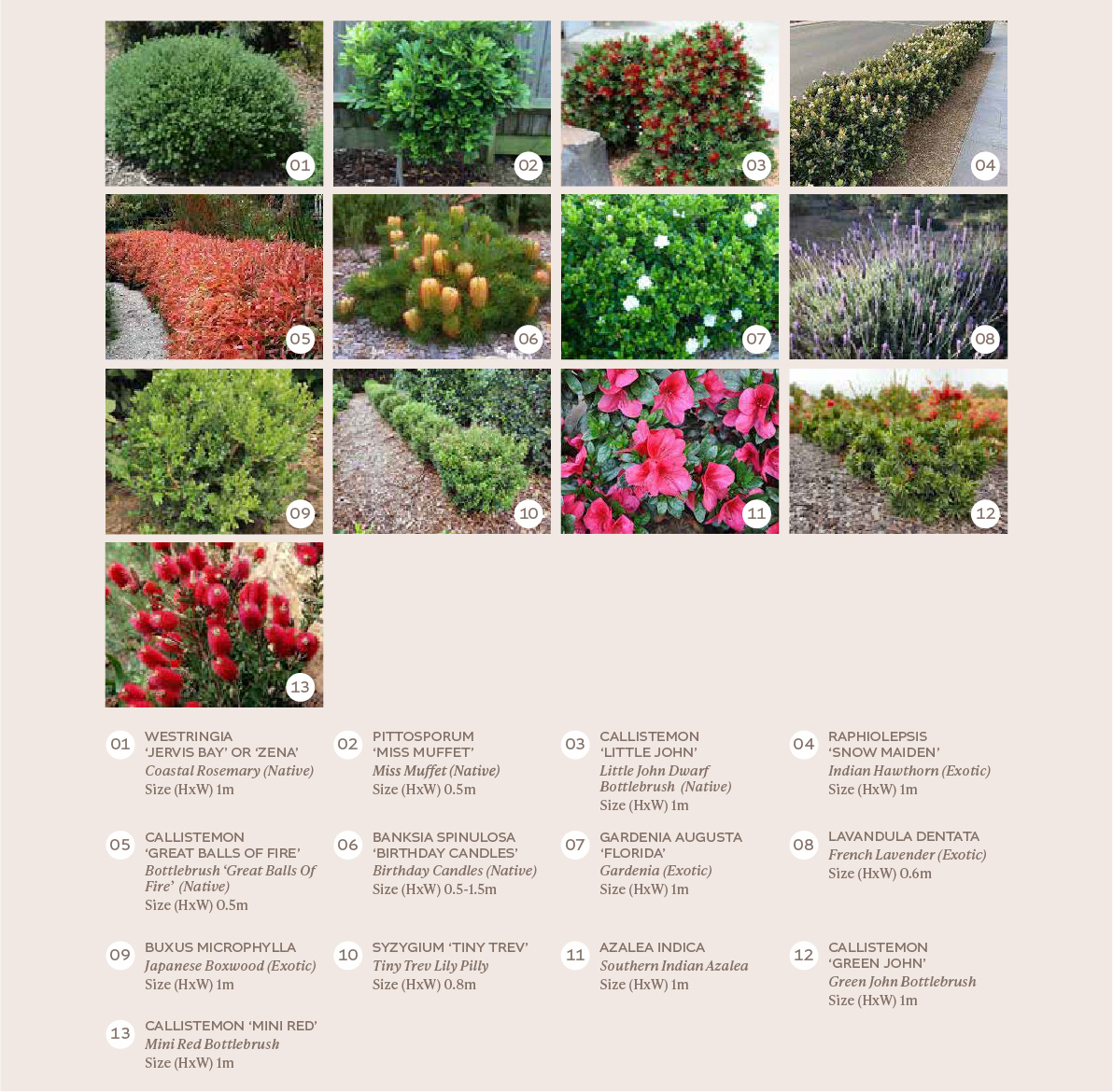
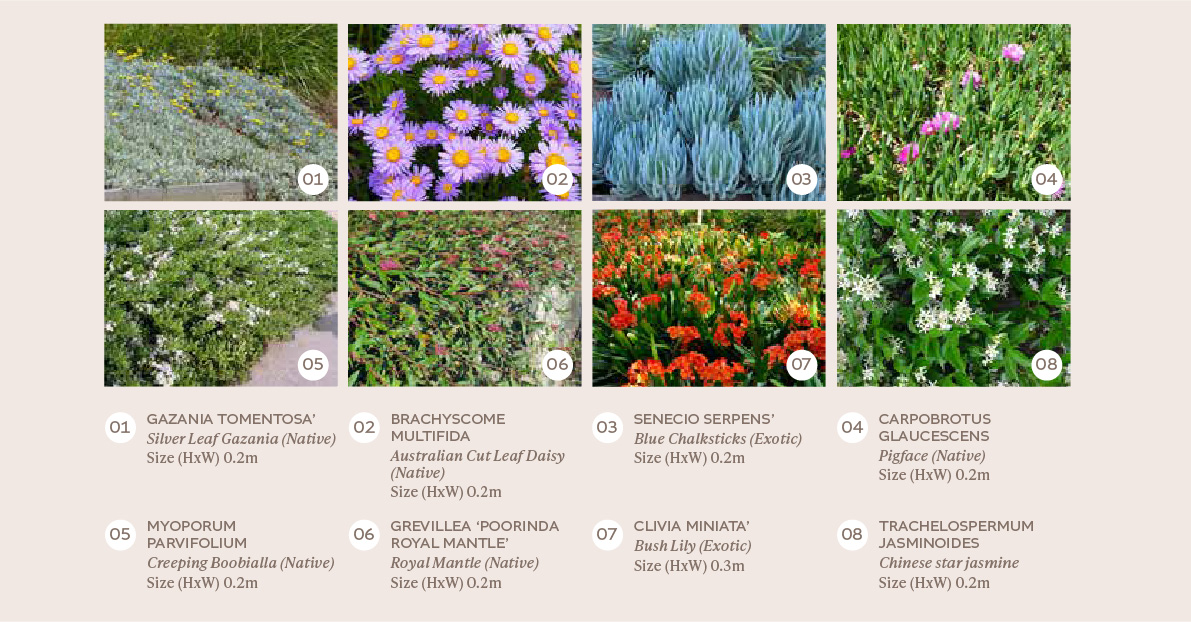
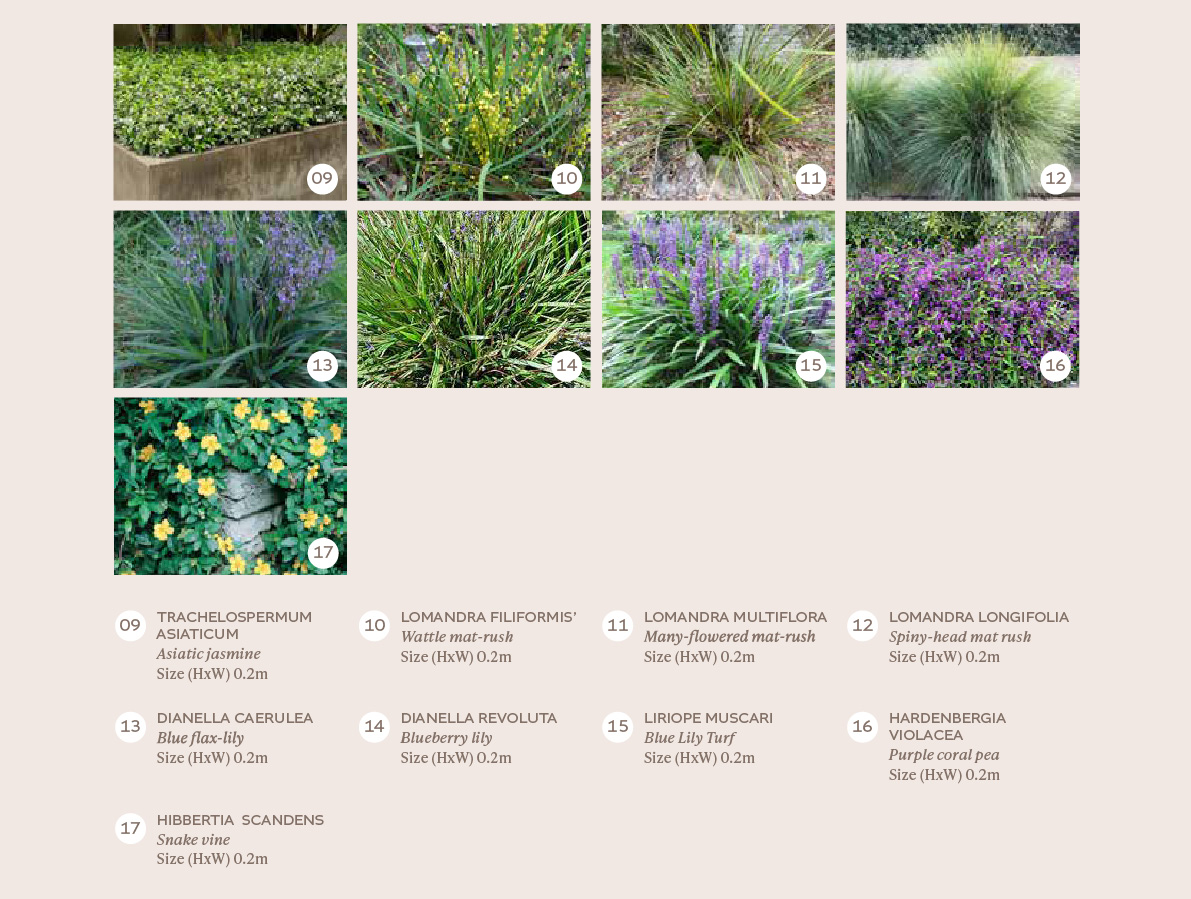
Recommended Plant Species list
NATIVE TREE FEATURE TREE
MEDIUM FEATURE TREE
SMALL FEATURE TREE
LARGE SHRUBS
MEDIUM SHRUBS
SMALL SHRUBS
TURF
GROUNDCOVER
Fencing
Fences play a key role in defining the character, safety, and social dynamics of a neighborhood. As such, the following controls are provided for the estate to promote a sense of consistency and cohesion:
KEY DESIGN CONSIDERATIONS:
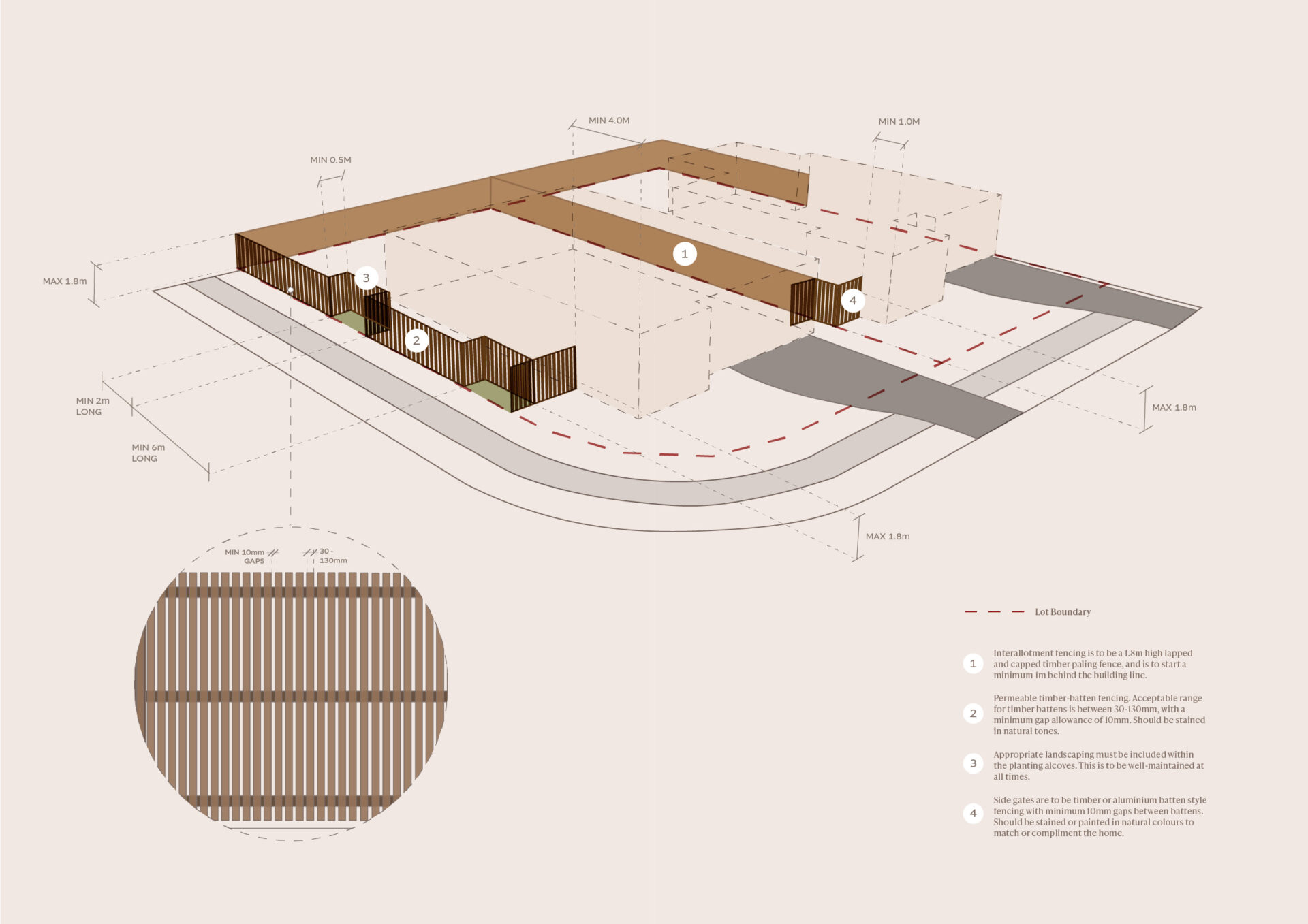
Interallotment fencing is to be a 1.8m high timber lapped-and-capped fence and must commence a minimum of 1m behind the front building line. Timber paling fencing must not be visible from the street.
Corner boundary fencing fronting a secondary façade must be set back a minimum of 4m from the primary front façade line to enable architectural expression at the building corner. Corner boundary fencing must have a maximum height of 1.8m and be constructed in a permeable timber batten style, with acceptable batten widths between 30-130mm and a minimum 10 mm gap between battens.
Boundary fencing lengths facing the street or public view that exceed 6m must incorporate landscaped alcoves with a minimum length of 2m and a minimum depth of 500mm, including appropriate planting that is well maintained at all times.
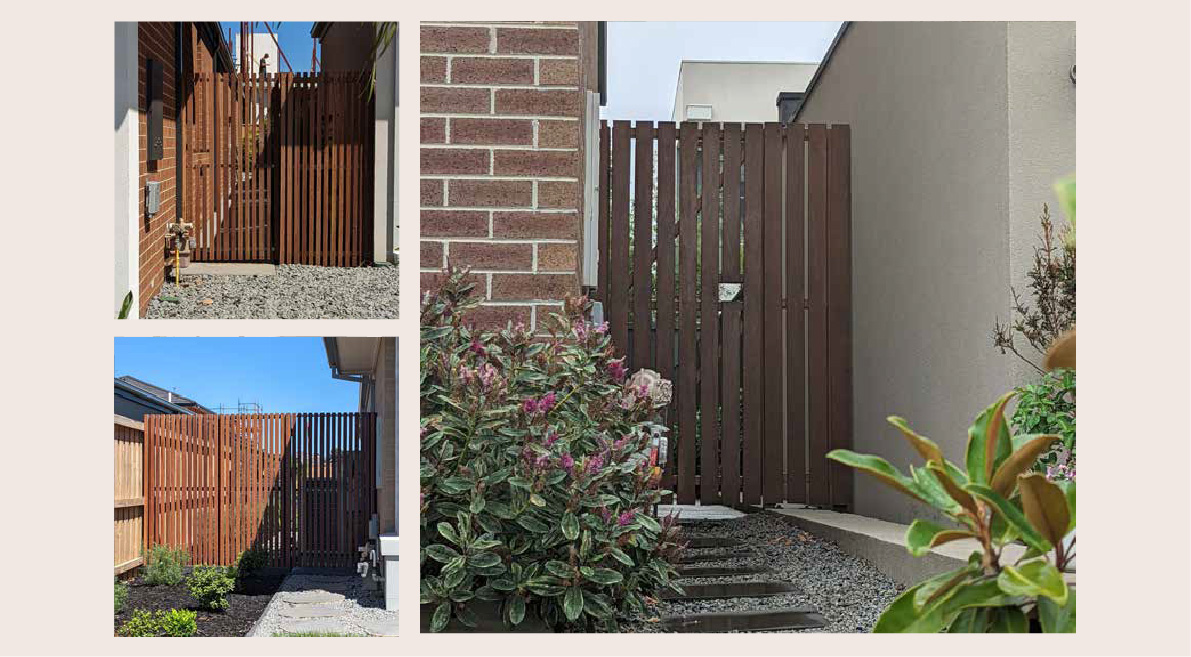
Side gates must be constructed in timber or aluminium batten-style fencing, with batten widths between 30-130mm and a minimum 10mm gap between battens.
All fencing facing the street, including side gates and corner boundary fencing, must be stained in natural tones that match or complement the dwelling façade and surrounding landscaping.
Colorbond fencing is not permitted
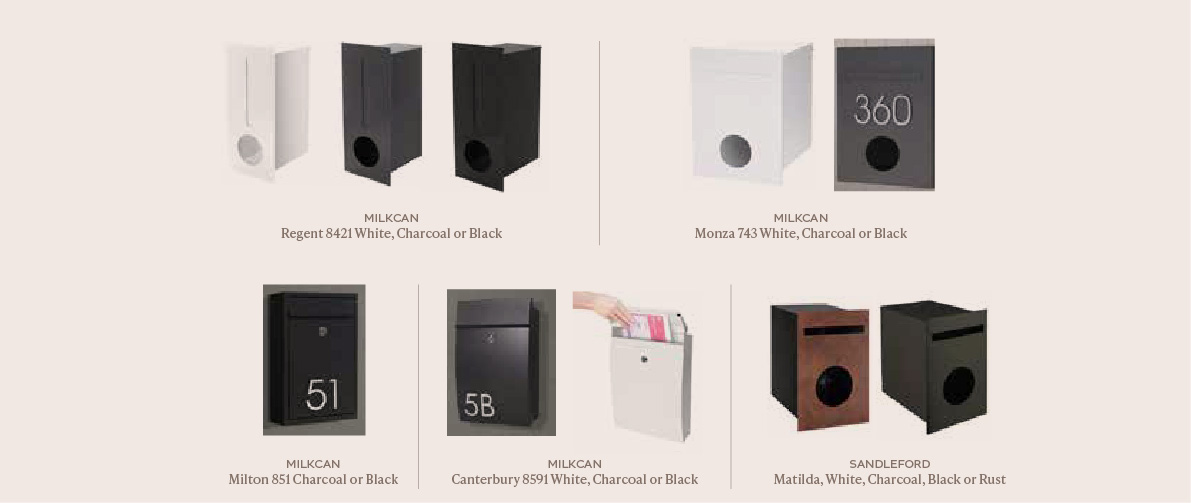
Letterboxes: Letterboxes should be located close to entry paths and where there is a front fence, letterboxes should integrated and mounted into the fence as per the examples herein.
Entry boulevard lots: For lots fronting the entry boulevard, Mirvac will be provide front fencing to front title boundary.
Installation Process for Entry Boulevard Fencing by Mirvac
After home completion and before landscaping, owner is to notify DRP.
DRP confirms timing for fencing works.
Site prep requirements:
1m strip clear of obstructions/materials
Ground must be level and smooth across the fence alignment
EXAMPLE FRONT FENCING DESIGNS
EXAMPLE SIDE GATE DESIGNS
Letterboxes
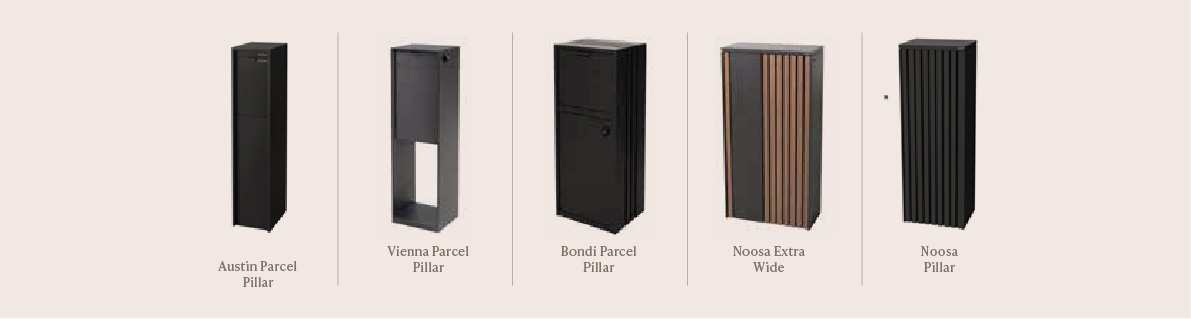
Letterboxes are a repeating element in the streetscape that should compliment the fencing and landscape and not be dominating in the streetscape.
LETTERBOX – FENCE MOUNTED
LETTERBOX – PIER
KEY CONSIDERATIONS:
Letterboxes are to comply with Australia Post size guidelines.
The style, material and colour of letterboxes are to be in keeping with the house and garden designs.
The letterbox should be incorporated into the design of the front fence be a pier or a box and post letterbox with a maximum height of 1.2m.
Letterboxes must clearly display the street number.
See above images for example styles for use in Everdene.
Retaining Walls
Retaining walls have both a functional and aesthetic role. Similar to fences, they can be highly visible from public view and contribute to the visual appeal and character of a street.
KEY DESIGN CONSIDERATIONS:
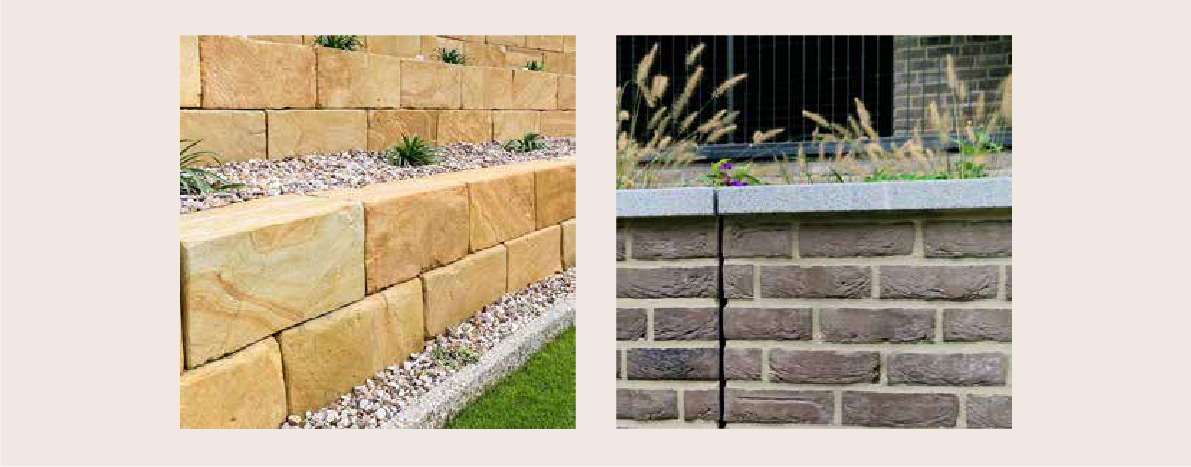
Retaining walls visible from the street should be well-integrated into the overall front yard design, must be concrete or masonry and complement the house facade colours (unless otherwise approved by the DRP)
Any proposed retaining walls visible from the street or public spaces must be designed to a maximum height of 0.9m. If further retaining is required, then this is to be stepped 500mm apart with landscaping in between
If visible from the street or public space, must be one of:
Split-face block wall
Brick wall (selected from approved palette)
Feature stone wall
Sandstone boulder/log wall
No timber or concrete sleeper retaining walls are permitted to be visible from street.
Rear yard concrete panel walls with universal beams are acceptable only where not visible from public space.
All fencing and retaining walls must be completed with the construction of your home.
The installation of any new retaining walls that will structurally affect the existing walls, building platforms or batters, and any modification of the lot’s existing batters and retaining walls, is only permitted once you have obtained professional advice from a structural engineer and received all relevant approvals. A copy of such advice and approvals must be provided to the Design Review Panel.