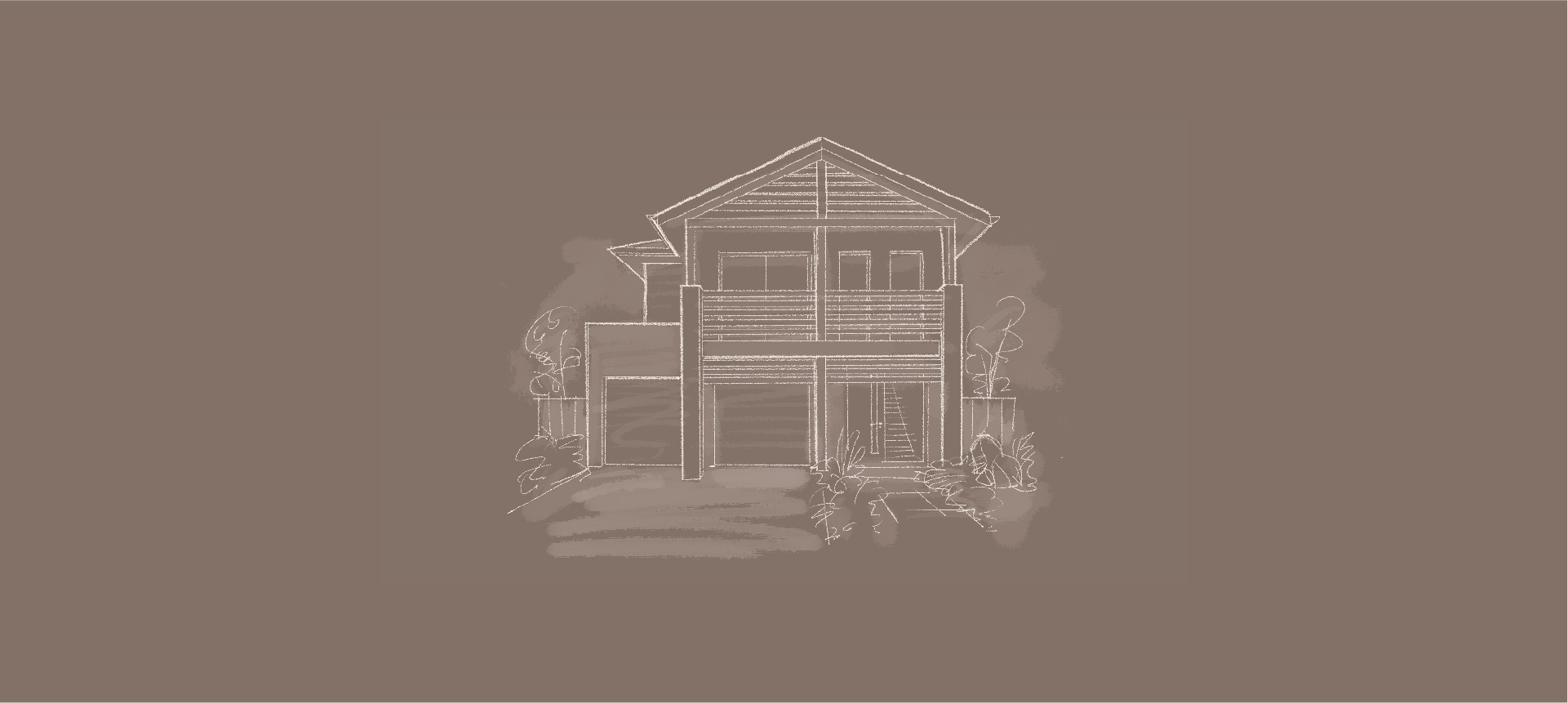
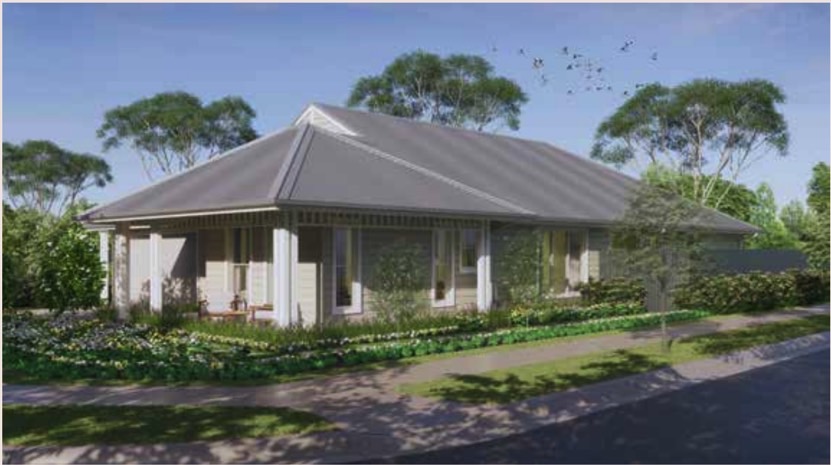
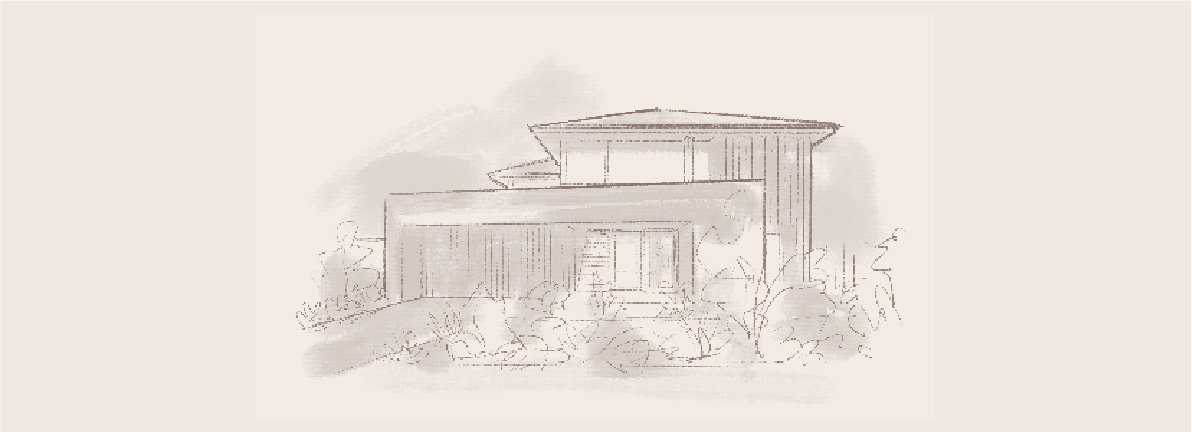
“Contemporary rural design blending minimalism with natural materials and clean lines”
The Everdene neighbourhood reimagines the Australian rural homestead through a contemporary lens, blending rustic charm with modern design.
The vision for contemporary rural design blends minimalism with natural materials, contrasting dark elements and clean lines. Emphasis is placed on integrating earthy tones, simple forms, well embellished gardens and a seamless flow between indoor and outdoor spaces to offer connectivity to the surrounding landscape. The integration of modern design with rustic charm will help shape a unique aesthetic at Everdene that is both timeless and distinctly Australian.
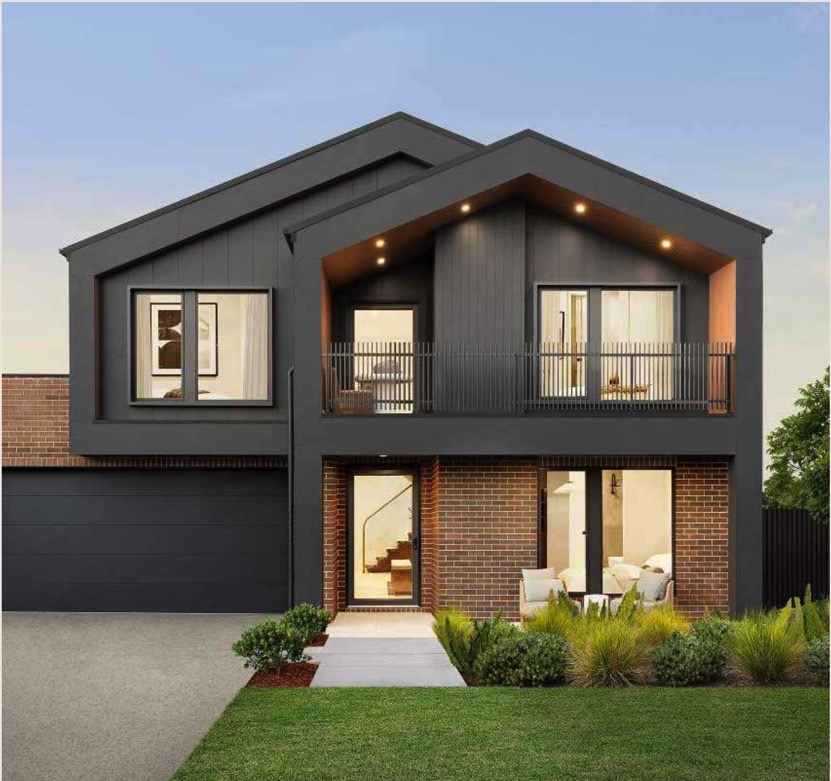
Scandi facade by Mcdonald Jones Homes. Artist’s Impression *
Primary Façade
The front façade of a home expresses its identity and contributes to the overall character and street appeal of Everdene. The facade should create a welcoming presence, with a clear focal point on the entryway. Articulation to the front of a home, including thoughtful variations in depth, materials, and design elements, plays a key role in achieving visual interest and a cohesive streetscape.
KEY DESIGN CONSIDERATIONS:
Entry: Keep the design simple, orienting the home towards the primary street frontage. The main entry must be well expressed, with a well-defined covered area.
Windows: All homes are to include well proportioned windows from habitable rooms facing the primary street frontage.
They should be appropriately articulated as elements of the façade design and are encouraged for visual interest and passive surveillance.
All doors to ground floor must be either hung or bifold style.
Obscure glazing is not permitted to windows facing the street or public view and instead, privacy to be achieved through window furnishing.
Sliding windows are not permitted to street facing facades. All windows to street facing facades must be either awning, casement or double hung style.
Habitable room windows should be oriented towards streets and public open space to provide passive surveillance and contribute to community safety. Non-habitable rooms such as bathrooms and WCs should not face the public realm and must be avoided wherever possible.
Window Fixings: External security blinds or shutters are not permitted.
Articulation: The front facade must include articulation and a minimum of two complementary finishes, such as feature brick or lightweight cladding and minimum two colours. A maximum of four materials and a maximum of four colours to be used on any facade. Extensive blank walls visible from the street are not permitted.
Materiality: Front facades must have a minimum of 25% of the area as rendered masonry or cladding.
Details: Eaves, balustrades, frames and other detail elements are to complement the colour and materials of the façade with darker contrasting elements encouraged.
Front Doors:
Front doors are to be consistent with a modern design look, and therefore replica heritage styles or highly ornate decoration is not permitted.
An image of your front door is to be provided in your DRP application for approval.
Front Security Door: Front security doors must use continuous sheets of stainless steel mesh, lattice screen doors are not permitted.
Services: Servicing infrastructure including meters, satellite dishes, air conditioning units are to be inconspicuous and screened from prominent public view. These are ideally located behind the front fence line.
Styling: Avoid stylised ornamentation or ‘Replica’ historic details.
Finishes used on the facade are required to return a minimum 4000mm on all sides of home, excluding those built to boundary
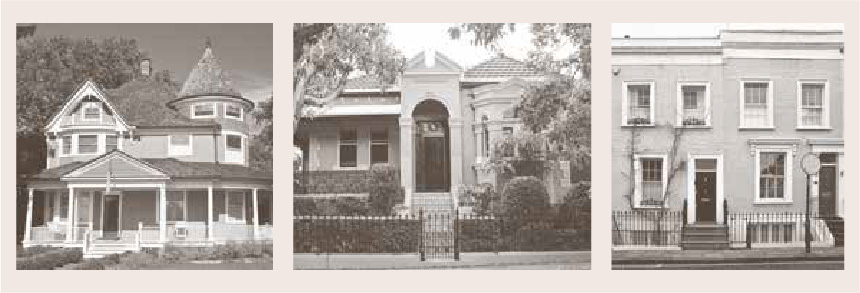
NOT PERMISSIBLE AT EVERDENE
Your home’s design must therefore be ‘contemporary’ and in keeping with the other homes in your street. Replica heritage styles and features (such as Victorian, Edwardian or Federation) are not permitted.
CONSIDERATIONS FOR YOUR FACADE
Although parapet walls are permitted they are to be minimised in bulk and scale so they do not dominate the streetscape. The use of alternate roof forms (eg, skillion/ gable/ hip) in combination with parapet walls are encouraged to reduce the bulk and scale.
Where a pitch less that 15 degrees is provided, this will be deemed as a flat roof, and therefore, parapets will be required to ensure concealment of gutters.
Façade articulation.
Clean, simple contemporary lines.
Maximum of Four (4) facade materials.
Glossy or reflective materials are not permitted.
High contrast colour schemes are encouraged, e.g. darker structural elements paired with natural finishes.
Corner lots require a secondary facade that compliments the front facade. Balconies are encouraged to wrap around the front and secondary facade.
Secondary Façade (Corner Lots)
Corner lots provide extra yard space and increased natural light, making them ideal for creative and innovative designs . With two street-facing sides, your home has a larger canvas to showcase its exterior , and facades must be designed to address both street frontages.
Artist’s Impression*
KEY DESIGN CONSIDERATIONS:
Consistency: Homes on corner lots must address the secondary street and include articulation, facade elements, verandahs, colours and materials that wrap around the corner from the primary facade and return for a minimum of 4m. These must be the same as or complement the primary street façade to ensure all facades are well presented.
Articulation: For corner lots, the maximum length of an uninterrupted wall break on the secondary street frontage is 8m. To provide articulation, a step of at least 230mm must be incorporated into the wall for a minimum length of 3m. Blank walls will not be permitted.
Windows:
A minimum of 20% glazing is required on upper storey facing the secondary frontage.
A minimum 1x habitable room window required within the first 4m on ground level facing the secondary frontage.
Walls: External walls that are not visible from the street or public open spaces should be constructed in colours and materials consistent with the front façade of the home.
Ground floor and first floor facing secondary frontage to be in contrast material to one another unless otherwise approved by the DRP.
A minimum of 2 and a maximum of 4 finishes are to be used on the secondary frontage, consistent with the primary frontage.
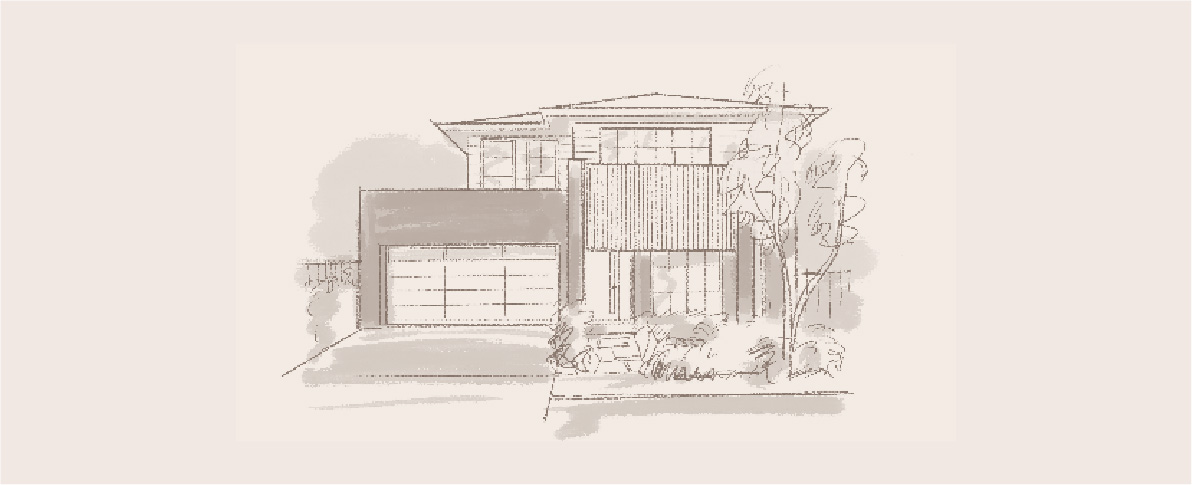
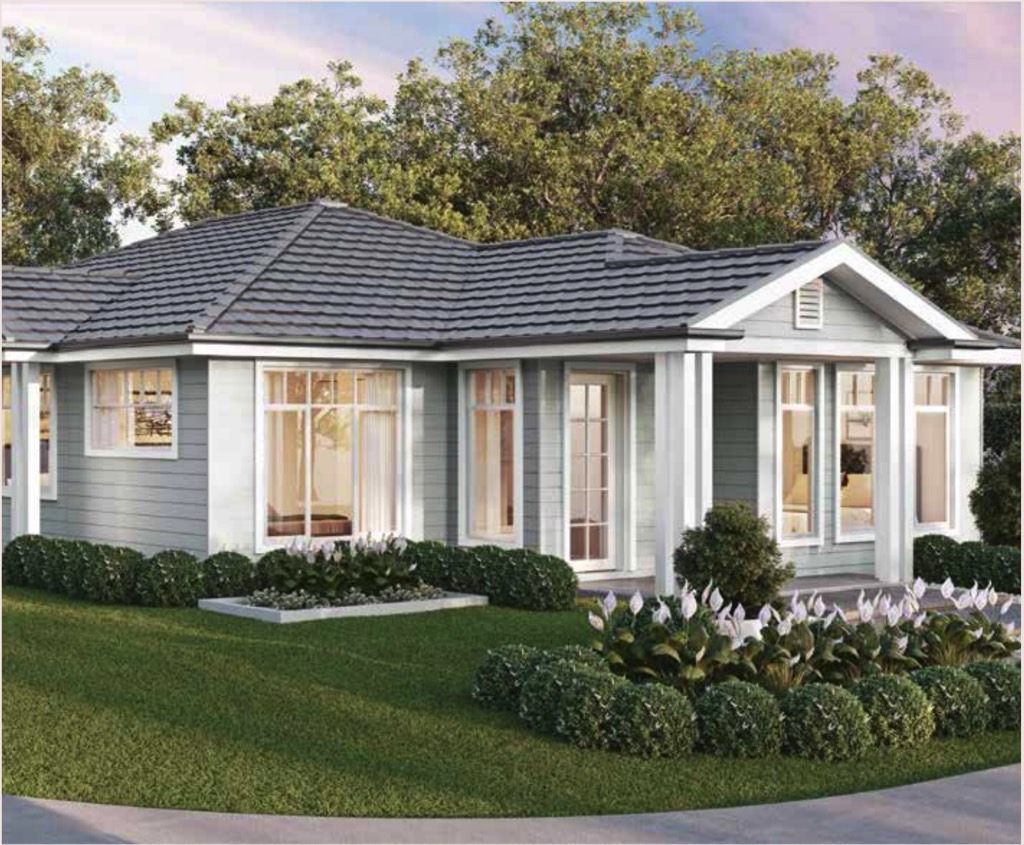
Hamptons Scheme 2 by Sundancer Homes. Artist’s Impression*
Roofs & Eaves
Roofs play a key role in defining the character and charm of our homes, ensuring that they complement the aesthetic requirements of Everdene. Thoughtfully designed roofs can enrich architectural appeal and contribute to an energy efficient home.
KEY DESIGN CONSIDERATIONS:
Acceptable roof coverings include:
Low/flat profile roof tiles
corrugated, non-reflective metal roof sheeting such as Colorbond
Curved profiles will not be accepted.
Minimum 450mm eaves are required to all sides of the home facing the street or public open space and must return a minimum of 4000mm.
For double storey dwellings, minimum 450mm eaves are also required around the entire upper-level roof perimeter.
Exemptions to eaves apply to zero lot lines (with an easement for access and maintenance), where a parapet has been provided, and garage sides built 0-200mm from the side boundary.
HIP AND GABLE ROOFS:
The classic hip and gable roofing styles are strongly encouraged within Everdene as they promote an enduring aesthetic that is traditional and timeless. Roof pitches are to be a minimum 22.5 degrees.
SKILLION ROOFS:
A strong architectural design feature in its own right, a skillion roof can add a bold contemporary look to your home. Skillion roofs are permitted on double-storey dwellings only and must have a minimum 15 degree pitch.
SINGLE STOREY ROOFS:
A well-defined, integrated entry element is required for all dwellings. For single-storey homes, this must include a portico or entry structure that is incorporated into the primary roof form subject to design merit.
OTHER ROOFS:
Other roof forms may be considered and assessed based on design merit, provided they do not dominate the streetscape and complement the surrounding architectural styles.
If you wish to build an alternate roof form than those listed please provide a concept to the DRP early for consideration ahead of finalising your plans.
Façade Repetition
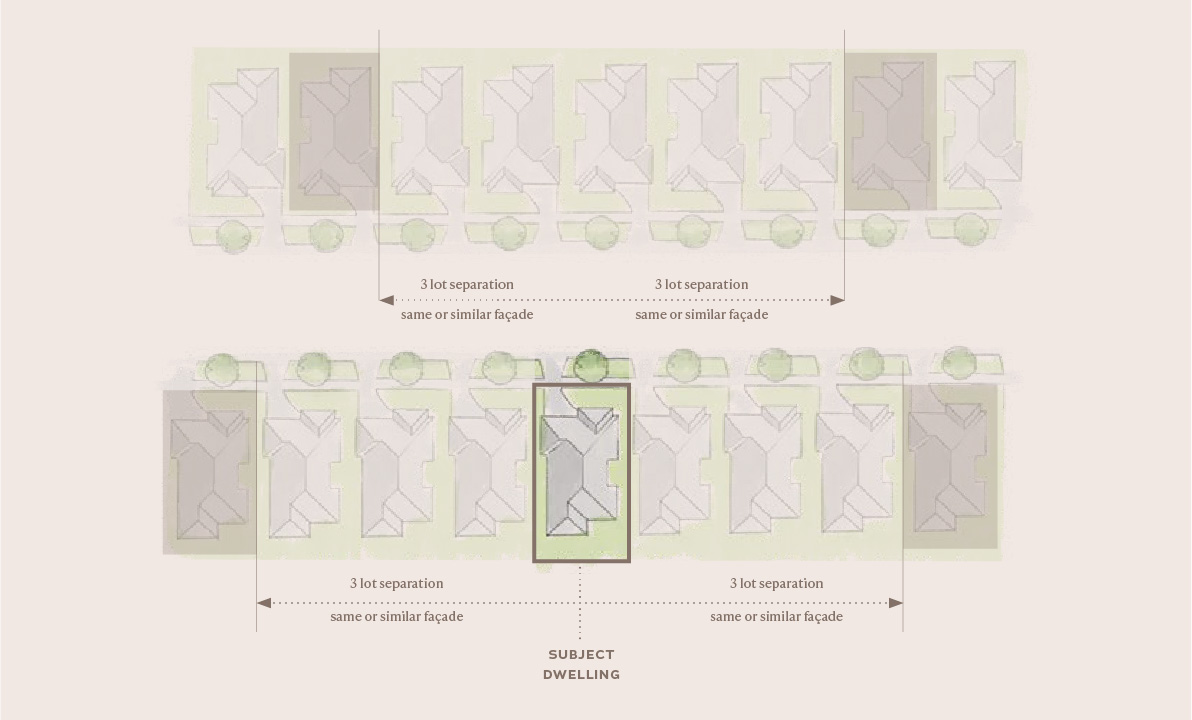
The façade of your home must avoid replicating or being too similar to a facade of another home within three lots in either direction on the same side of the street or within two lots in either direction on the opposite side of the street.
If more than one application of the same or similar façade design has been submitted for lots within close proximity, priority will be given to the first complete application to be received.
Requests can be made to the DRP to determine whether a similar style façade is proposed to be used within a street. Similar facades will only be allowed if the DRP is satisfied there is sufficient variance in the appearance, which may be achieved through variation of colours and materials.
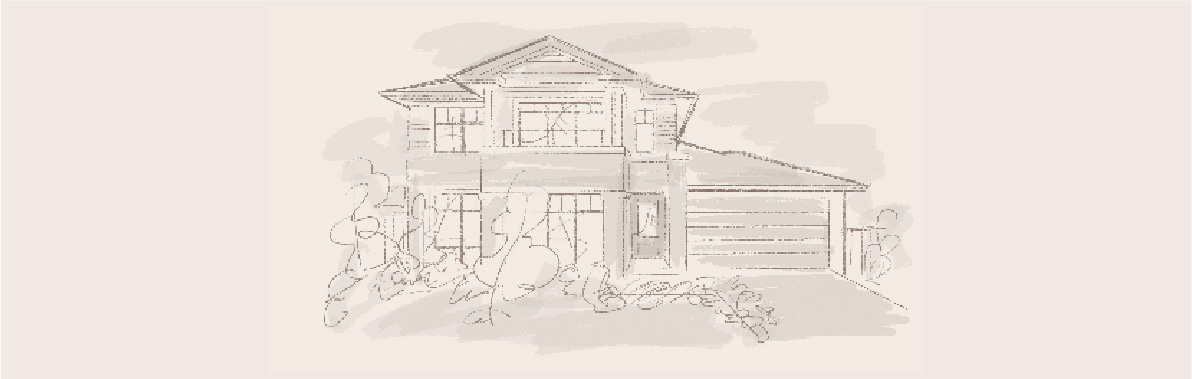
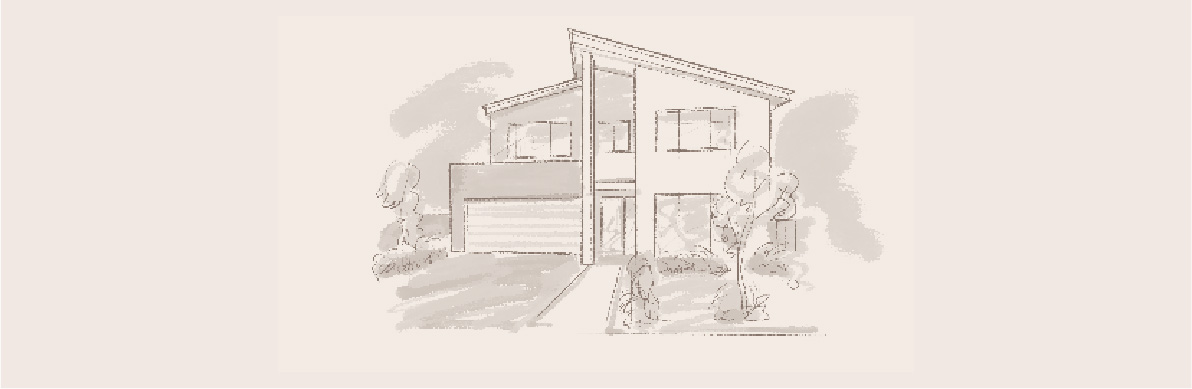
FAÇADE REPLICATION GUIDE
Garage, Driveways and Paths
Garages and driveways can be visually dominant in a streetscape because of their size and volume. It is therefore important that they are planned and designed with care to ensure they are complimentary to the overall front façade and front garden.
KEY DESIGN CONSIDERATIONS:
Garage Dominance: As your house and entryway should be the main focal point, ensure that your garage design does not dominate the façade or compete for attention, and garage widths do not contribute to more than 60% of your lot width.
Garage Doors:
Garage doors must be sectional in style with a timber, timber look or colorbond finish only.
Roller doors are not permitted.
Door colour must be in keeping with the material and colour palette of your home and complement the primary façade colour (subject to the approval of the Design Review Panel). No gloss or shiny materials are permitted.
Driveway Design:
Only one driveway is permitted per allotment.
Driveways must be offset a minimum of 500mm from the side boundary, and are to have soft landscaped areas on either side, suitable for water infiltration.
For zero lots a minimum offset of 300mm is required from the side boundary.
Driveway Materiality: Acceptable driveway materials include; exposed aggregate concrete, segregated brick, slate or natural stone pavers or coloured-through, or resurfaced concrete. Natural grey unfinished, stencilled, or painted on concrete is not allowed for driveways. Plain concrete must be used across the verge as per the DCP.
Driveway Area: Driveways are included in the impermeable hard surface area of the front garden and must not exceed 60% of the total area of the front garden.
Driveway crossovers: The relocation of driveway crossovers requires DRP approval. All costs to relocate crossovers are to be covered by the land owner, and disused crossovers are to be removed and replaced with a standard kerb and gutter.
Timing: Driveway and crossover must be complete prior to occupation of the home.
Carports: Carports will not be approved as they can lessen the presentation of the streetscape with clutter.